
The Solar Panel That Punches Well Above Its Weight - If You Treat It Gently
I have a complicated relationship with the idea of going off-grid. The fantasy is appealing: no sockets to hunt for, no apologising to a campsite neighbour for stealing power, just sunlight doing something useful for once. The reality, historically, has involved underpowered panels, a lot of cable management, and the dawning realisation that 60 watts is not going to charge anything quickly.
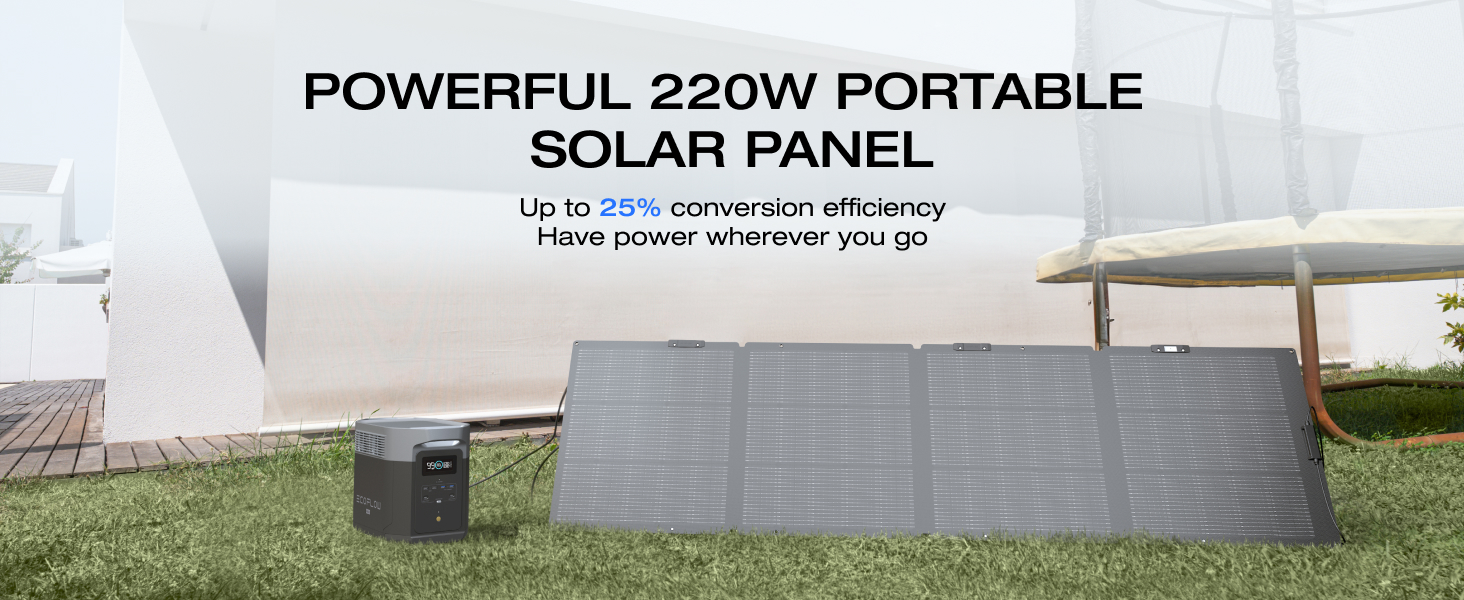
The EF EcoFlow 220W Portable Solar Panel is a serious attempt to fix the wattage problem. At $200, it is priced accordingly. Whether it earns that is a more complicated answer than EcoFlow's marketing would have you believe - but the honest version is: for most people, probably yes.
Who This Is Actually For
- ⚡ EcoFlow power station owners - this pairs natively with DELTA and River series units via XT60i
- 🏕️ Campers, van-lifers, and weekend overlanders who need real wattage, not just a trickle charge
- 🚐 RV travellers who want a panel that folds flat, packs into its bag, and doesn't require mounting hardware
- 🏠 Off-grid and emergency preparedness setups where occasional high-output charging matters
One group I'd steer with more caution: full-time nomads who would deploy and fold this panel every single day. There's a durability pattern in the reviews worth reading carefully before buying.
What You're Getting
The Efficiency Story Is Genuine
The panel uses N-Type TOPCon solar cells, which EcoFlow claims achieves 25% conversion efficiency - a meaningful step up from the P-PERC technology that most competitors in this price bracket still use. In practice, reviewers back this up. One user in Hawaii recorded a peak input of 206 watts at midday - 93.6% of rated capacity. A Phoenix buyer reported around 180 watts at 1pm. A Florida reviewer was pulling 188-194 watts on a clear winter day. You are unlikely to hit 220W under normal conditions, but consistently landing in the 180-200W range is genuinely impressive for a portable panel at this price.
The Kickstand Is Thoughtful, Mostly
The 30-60° adjustable angle bracket comes with an integrated solar angle guide - a small compass-style indicator that helps you orient the panel correctly for the sun's position. It's a practical detail that removes guesswork. The setup itself is generally quick and cable-free. Where it gets fiddly: the legs are held by elastic straps with quite a lot of tension, meaning each time you position one leg, the other tends to spring back. A few reviewers noted this smooths out over time, but out of the box it benefits from a second pair of hands.
It's Light for 220 Watts
At 15.9 lbs, this is competitive for its output class. Folded dimensions are 23.6 x 22.5 x 1.3 inches - roughly the footprint of a large laptop bag. The included carry bag is a genuine carrying bag, not a sleeve, and several reviewers mentioned using it for storage between trips.
IP68 Waterproofing and ETFE Coating
The ETFE surface coating is more durable than the glass-faced alternatives and handles weather exposure without degrading efficiency over time. The IP68 waterproofing rating covers the panel for rain, dust, and general outdoor exposure. This is where the spec sheet and reality diverge slightly - more on that below.
💡 Yen's Note
If you own an EcoFlow DELTA 2, two of these panels can charge it in around 2.9 hours in good sun conditions. One panel gets you there in roughly 5.8 hours. That pairing is clearly what EcoFlow designed around, and the native XT60i cable in the box means no adapters needed.
The Part Worth Reading Carefully
With 200 reviews and a 4.4-star average, the rating is solid - but the review breakdown matters here. The dominant durability concern centres on the back panel glass cracking during folding. One particularly detailed review from a full-time nomad described cracking multiple panels within a calendar year, even with careful daily handling and proper use of the included foam and bag. EcoFlow's customer service handled the initial replacement well, which counts for something. But this reviewer's conclusion - that the panel is highly efficient but not built for daily professional use - is honest and worth respecting.
A separate but related issue: the foam inserts that ship between the panels to prevent surface contact apparently need to be kept for storage and transport. The design requires them. At $200, needing to retain packaging foam to avoid damaging the product is a real design shortcoming.
For occasional and seasonal use - camping trips, weekend off-grid, emergency backup - the durability concerns are much less likely to surface. The nomad use case is the stress test, not the average buyer's situation.
| ✅ Works Well | ⚠️ Worth Knowing |
| Genuinely high efficiency - 180-200W in real-world use | Back panel glass prone to cracking under daily use |
| Integrated angle guide takes the guesswork out of positioning | Foam packaging inserts need to be kept for safe storage |
| Lightweight for its output class at 15.9 lbs | Kickstand legs spring back during solo setup |
| IP68 waterproofing and durable ETFE coating | Priced above most competitors - alternatives exist at $170 |
| Native XT60i cable for EcoFlow station compatibility | Elastic kickstand straps stretch out over time |
| Carry bag included, not just a sleeve | Doesn't consistently hit rated 220W - expect 85-93% in good conditions |
Worth It?
For occasional use - camping, road trips, backup power - this is a well-performing panel at a price that's easier to justify once you see the real-world wattage numbers. The N-Type cell technology makes a practical difference. The durability is adequate for most buyers; it's daily professional use that tests it past its limits. If you're an EcoFlow ecosystem owner, the native cable and charging compatibility push this comfortably over the line. If you're brand-agnostic and shopping on efficiency alone, it still holds up against the alternatives.
As an Amazon Associate I earn from qualifying purchases. This comes at no extra cost to you.