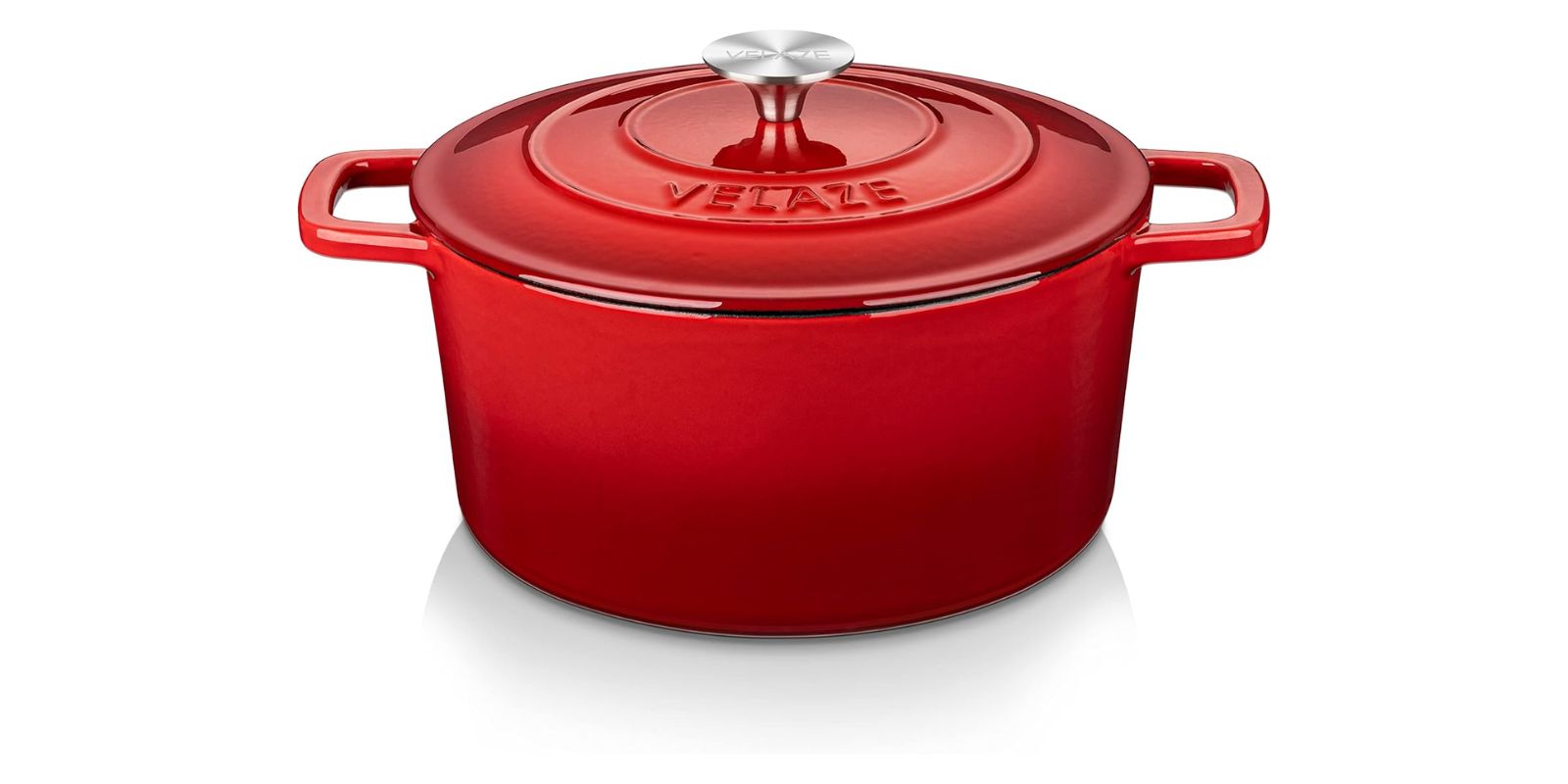

A heavy red pot I did not expect to love
For a long time I told myself I did not need a Dutch oven. I have a perfectly good heavy-bottomed pan, a slow cooker, and a baking tray. A Dutch oven seemed like the kind of thing that moved into your kitchen, took up permanent counter space, and then mostly sat there being photogenic.
Then I started trying to bake sourdough. The first two loaves were pale pancakes with tight crumb. The third, after I gave in and borrowed a friend's enamelled cast iron, came out of the oven with a dark blistered crust that actually crackled when it cooled. Reader, I ordered my own that week. It was the Velaze 6-quart enamelled cast iron Dutch oven in red, and it has done far more than bread.
Who actually needs this
Not everyone. If your cooking is mostly weeknight pasta and stir-fry, a Dutch oven is a lot of pot sitting idle. If any of the below sounds like your week, though, it earns its shelf.
- 🍞 Sourdough or no-knead bread bakers (the lidded steam is the whole trick)
- 🍲 Anyone who makes stews, chilli, bolognese in serious quantities
- 🔥 People with an induction hob — most Dutch ovens work on it, this one included
- 🎁 A wedding present that does not feel naff, if you don't mind a heavy box
- 🏡 Households of 3 to 5 (6-quart is the right size, 5.9 inch base)
What it actually gets you
The heat behaviour
Cast iron heats slowly and evenly, then holds that heat like a grudge. For stews this means a proper simmer that doesn't need babysitting. For bread it means the pot is already violently hot when the dough goes in, which is the whole reason for the dark crackly crust.
The enamel coating
White inside, glossy red outside. Never needs seasoning. Unlike bare cast iron you can cook tomato-based sauces in it without worrying, and you can wash it properly. It's also flat enough on the base to sit on induction, glass-top, gas, or ceramic — we have glass-top and it doesn't rock.
The lid
Tight-fitting with a small self-basting ridge pattern on the underside. Rain-drop impressions that drip moisture back down onto the food instead of escaping. Small detail, actual difference on braises.
The weight
This is not really a feature, it's a fact. The pot is heavy. Dual handles on the sides, not a single long one, which makes two-handed lifting easier but means you need oven gloves on both hands. Oven safe to 500°F / 260°C, which covers any bread you'll ever bake at home.
💡 Yen's Note
Don't use metal utensils — wooden or silicone only. Enamel chips if you scrape it, and once it chips it keeps chipping. Also skip the citrus cleaners for the outside. Warm soapy water and a nylon brush is all it needs. Dry it properly before putting the lid on for storage or the rim can rust over time.
The honest version
4.7 stars from around 1,720 reviews. Good bones. The happy majority praise the cooking performance, the colour (a proper glossy red, not a pink-red), and how easy it is to clean. The complaints cluster around two things and you should know both. First, a small but real number of reviews report chipped enamel either out of the box or after modest use. Most of those sound like packaging damage during shipping, so check yours when it arrives, photograph any chip, and return it if unhappy. Second, the weight. If you struggle to lift a full casserole dish from a low oven, a 6-quart Velaze full of stew might be genuinely beyond comfortable. The 5QT version exists for exactly this reason.
There's a naming oddity I'll flag for honesty: one German reviewer pointed out that the 7.5QT size is measured including the lid's dome, not just the pot. The 6QT round is the more honest size. That's what I have.
For the money this does what much more famous French names do, minus the heritage and the inheritance. I'm not going to pretend it's the same thing as a Le Creuset handed down through a family. It isn't. But it bakes the same bread, and I'll take that.
As an Amazon Associate I earn from qualifying purchases. This comes at no extra cost to you.